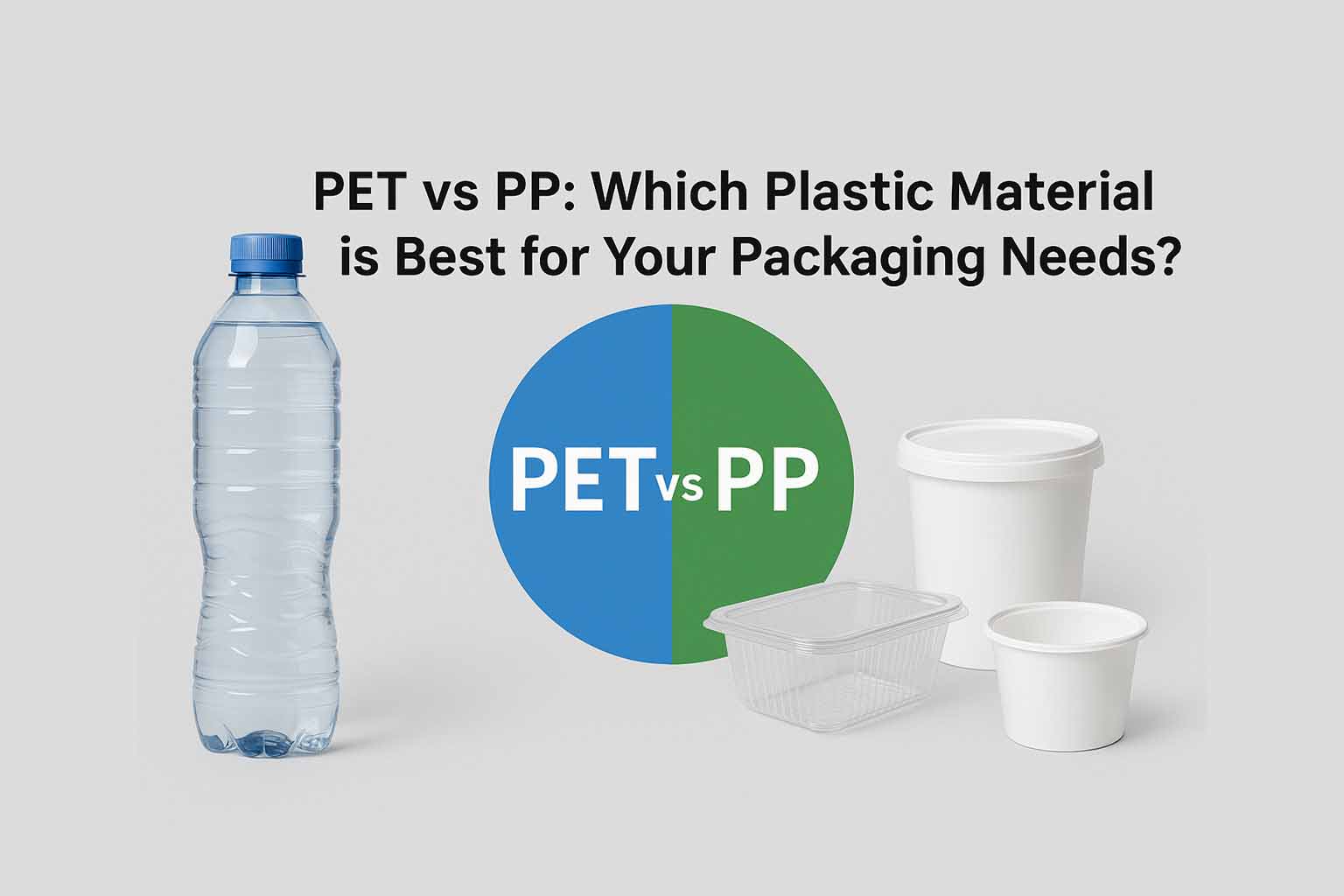
PET vs PP: Which Plastic Material is Best for Your Packaging Needs?
🚀 Introduction
Choosing the right plastic material is crucial for packaging efficiency, cost, and environmental impact. Two of the most widely used plastics in injection moulding are PET (Polyethylene Terephthalate) and PP (Polypropylene).
At Hydroking Industries, we often get asked which is better for packaging — PET or PP? In this detailed blog, we’ll help you compare these materials across various factors including durability, recyclability, transparency, and production ease.
🔄 PET vs PP – Quick Comparison Table
| Feature | PET (Polyethylene Terephthalate) | PP (Polypropylene) |
|---|---|---|
| Clarity | Excellent (highly transparent) | Translucent to opaque |
| Strength | Strong and impact-resistant | Good, but less than PET |
| Heat Resistance | Up to 70°C | Up to 120°C |
| Barrier Properties | Excellent against oxygen & moisture | Moderate |
| Recyclability | Widely recycled | Recyclable but less accepted |
| Cost | Slightly higher | More affordable |
| Moulding Ease | Needs precise temperature control | Easier to mould |
| Applications | Bottles, jars, medical containers | Food trays, caps, straws |
🧶 What is PET?
PET (Polyethylene Terephthalate) is a clear, strong, and lightweight plastic that is widely used in packaging, especially for beverage bottles. It offers excellent moisture and gas barrier properties and is 100% recyclable.
✔ Applications:
- Water and soft drink bottles
- Oil containers
- Blister packaging
- Pharmaceutical jars
✔ Advantages:
- High transparency
- Great tensile strength
- Chemical resistance
- Safe for food contact
❌ Disadvantages:
- Requires careful heating during moulding
- Less resistant to high heat compared to PP
🥜 What is PP?
PP (Polypropylene) is a thermoplastic polymer used for a wide variety of applications including packaging for food, consumer products, and medical supplies. It is known for its thermal stability and cost-effectiveness.
✔ Applications:
- Hinged caps
- Microwaveable containers
- Food trays
- Medical syringes
✔ Advantages:
- Better resistance to heat (up to 120°C)
- Lower cost
- High flexibility and fatigue resistance
- Suitable for injection moulding and blow moulding
❌ Disadvantages:
- Less clear than PET
- Not as good for oxygen barrier
🌫 PET or PP – Which One is Right for You?
| Requirement | Best Material |
|---|---|
| High clarity for visibility | PET |
| Low-cost packaging | PP |
| Heat resistance (e.g., microwavable) | PP |
| Recyclability and eco-focus | PET |
| Gas/moisture protection | PET |
| Flexible, durable caps or closures | PP |
🏠 Hydroking Machines for PET & PP Moulding
At Hydroking Industries, we offer specially configured Injection Moulding Machines for both PET and PP applications. Whether you’re manufacturing transparent bottles or microwave-safe containers, we deliver machines with:
- Precise temperature control
- Servo motor energy-saving systems
- High-pressure injection units
- Reliable clamping force
We also offer custom mould development and automation integration as per your product requirements.
✨ Conclusion
Both PET and PP are excellent plastic materials for packaging, each with unique advantages. If you require transparency and recycling capability, PET is ideal. If you need thermal resistance and low cost, PP is your go-to material.
Hydroking Industries is here to guide and equip you with the right machines and technical know-how to make the most efficient use of either material.
📢 Ready to Choose Your Material and Machine?
📧 Email: official.hydroking@gmail.com
📞 Call: +91-8090209080
🌐 Website: www.hydrokings.in